
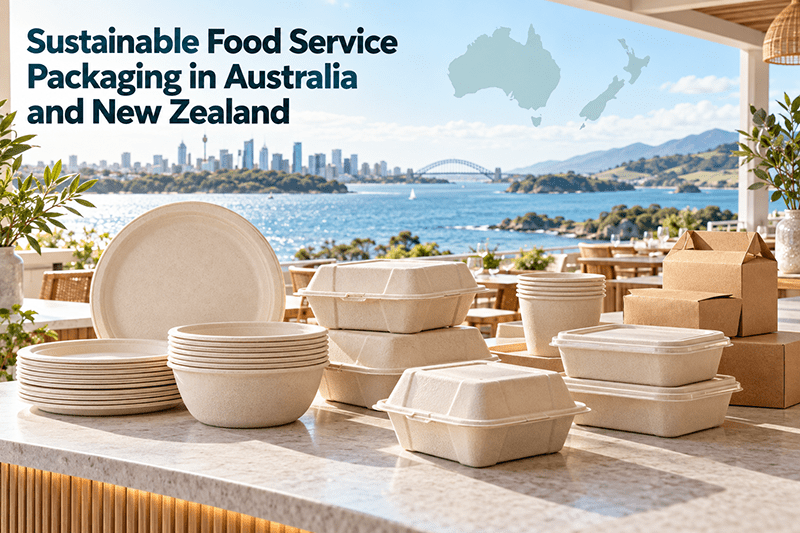
What drives sustainable food service packaging in Australia
Demand for sustainable food service packaging in Australia and New Zealand is driven by strong café culture, a large takeaway and delivery market, and government action against single-use plastics. Australian states and territories have introduced their own bans on items such as plastic plates, cutlery and polystyrene food containers, and New Zealand has phased out several single-use plastic items. Operators are replacing these with plant-based options such as bagasse.
Consumers in both countries are highly aware of packaging waste. Many cafés, food trucks and restaurants use eco friendly packaging as part of their brand, and councils, universities and event organisers include packaging rules in their sustainability plans. Because rules differ between states and between Australia and New Zealand, distributors often supply products that meet the strictest requirements, which keeps stock simple across all their customers.
The shift is also visible in procurement. Large food service groups, airports, stadiums and universities now write packaging requirements into supplier contracts, and some councils encourage plastic-free packaging at markets and public events. This steady institutional demand balances the seasonal swings of café and festival sales, giving importers a more predictable base on which to plan containers and warehouse stock.
Key buyers of sustainable food service packaging
Packaging wholesalers and catering distributors supply cafés, takeaways and restaurants in every city. Contract caterers serve hospitals, aged care, mining camps, schools and offices. Event and festival caterers buy large volumes of bagasse plates and bowls during the warmer months. Supermarket delis and meal prep businesses need containers with lids that hold food securely through chilling and transport.
Each group buys in its own way. Wholesalers look for a broad catalogue, reliable local stock and clear product information. Contract caterers may use tenders with detailed specifications and compliance requirements. Event caterers need flexibility and fast delivery before peak weekends. Online stores selling to small businesses value attractive packs and consistent quality. Understanding these patterns helps importers decide which sizes to stock and how much buffer to hold.
| Product | Typical users | Why they choose it |
|---|---|---|
| Clamshells 6x6, 9x6, 9x9 | Takeaways, food trucks, burger outlets | Sturdy, grease resistant, plastic-free |
| Round and compartment plates | Events, caterers, schools | Presentation, strength with hot meals |
| Bowls 180 to 350 ml | Cafés, poke and noodle bars | Soups, salads, desserts in fibre |
| Containers with lids | Delis, meal prep, delivery kitchens | Secure closure, stackable, chilled use |
Biosecurity and import rules in Australia and New Zealand
Both countries have strict biosecurity systems. Plant-based products such as moulded bagasse may be subject to import conditions, so check the Australian BICON database and New Zealand's MPI requirements for your specific product before shipping. Packaging materials, pallets and container cleanliness are also inspected, so use treated or compliant pallets and make sure containers are clean. Your customs broker can confirm documents and any declarations needed.
For compostable claims, ask your supplier for test reports against recognised standards, such as EN 13432 or ASTM D6400, and check which local standards your customers expect. Consumer law in both countries requires environmental claims to be accurate and supported by evidence. Clear, honest wording on packs, such as plant-based and plastic-free with composting guidance where facilities exist, protects both the distributor and their café customers.
HS codes, duty and the India Australia ECTA
Moulded bagasse tableware is usually classified under HS heading 4823, often 4823.70, and tissue napkins under 4818. Confirm exact codes with your customs broker and check the current tariff with the Australian Border Force or New Zealand Customs. The India and Australia ECTA may offer preferential treatment on eligible goods with a valid certificate of origin, so ask your broker whether it applies to your products.
Sourcing sustainable food service packaging from India
India has abundant sugarcane and a growing moulded fibre industry. White Orchid produces bagasse plates, bowls, clamshells and containers at Santej, Gujarat, alongside virgin pulp tissue napkins, with ISO 9001, ISO 14001, ISO 22000, GMP and FSC certification. Sea freight from Mundra, Pipavav or Nhava Sheva to Australian and New Zealand ports typically takes several weeks and varies by carrier, route and season.
A mixed container of clamshells, plates, bowls, containers and napkins lets a distributor launch a complete plastic-free range with one freight booking. Private label on poly bags, boxes and master cartons is available with an MOQ, so wholesalers can build their own brand. Planning orders ahead of the Australian summer and festival season helps avoid shortages when café and event demand peaks.
Australian and New Zealand buyers are quick to spot weak packaging or vague green claims. Products that perform well and come with honest documents earn repeat orders.
Building a distribution business in Australia and New Zealand
Start with a clear focus, such as café and takeaway wholesalers in one or two cities, or contract caterers across a state. Hold local stock in a warehouse near a major port, because few customers will wait for a container to arrive. Prepare product sheets with sizes, capacities, pack counts and pallet patterns, and test samples with real menus, including hot, oily and saucy dishes.
Relationships with wholesalers take time to build, but they last. Visit key accounts, share test results and respond quickly to quality questions. Keep reliable stock of the fast moving sizes, such as 9x9 clamshells and mid-size bowls, and use slower lines to round out mixed containers. Consistency from container to container is what turns a trial order into a long-term supply agreement.
Tissue products can strengthen the offer. Many cafés and caterers buy napkins from the same wholesaler that supplies their packaging, so adding tissue napkins and table tissue to a bagasse container increases order value without extra freight bookings. It also gives distributors more reasons to stay in regular contact with customers, which helps them notice new needs early.
- Check BICON and MPI import conditions before shipping any plant-based packaging.
- Use treated pallets and clean containers to avoid biosecurity delays at port.
- Ask your broker whether India and Australia ECTA preferences apply to your goods.
- Match every compostable claim to current test reports and local consumer law.
- Order ahead of summer and festival peaks to keep popular sizes in stock.
Partner with White Orchid in Australia and New Zealand
White Orchid is appointing importers and distributors in Australia and New Zealand for bagasse tableware and tissue products. We ship under EXW, FOB, CFR, CIF or door delivery terms. Contact White Orchid on +91 9825109781 (phone or WhatsApp) or [email protected], or review our certificates first, to request samples and a quotation.
Frequently Asked Questions
Does bagasse tableware need biosecurity clearance in Australia?
Plant-based products such as moulded bagasse may be subject to import conditions. Check the BICON database for your specific product and work with a customs broker to prepare the required documents.
Can the India Australia ECTA reduce costs on bagasse imports?
The ECTA may offer preferential treatment on eligible goods with a valid certificate of origin. Ask your customs broker to confirm whether your products qualify and what documents are needed.
Which bagasse items sell fastest in Australian cafés?
Clamshells, mid-size bowls and containers with lids are popular for takeaway meals, salads and soups. Plates and compartment trays sell strongly to caterers and events, especially in warmer months.
What pallets should be used for shipments to New Zealand?
Use treated or compliant pallets that meet New Zealand biosecurity requirements, and make sure containers are clean. Your freight forwarder and customs broker can confirm current MPI rules before shipping.