
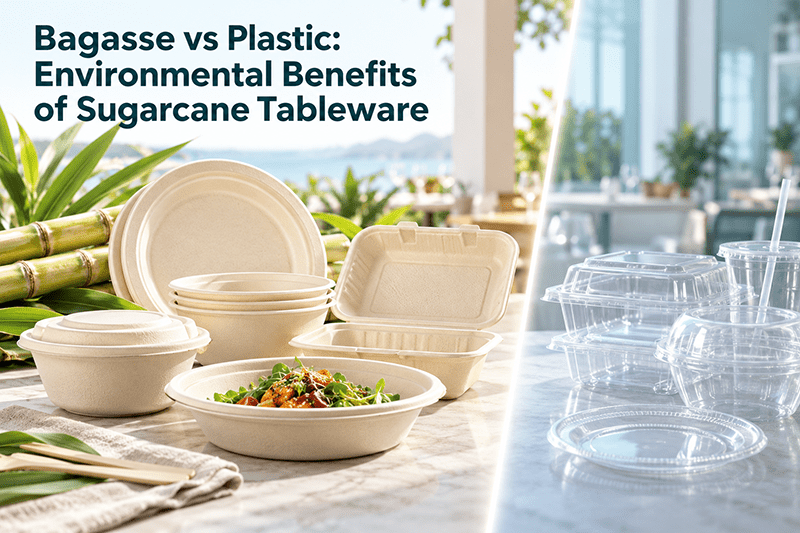
Bagasse vs plastic: what is the difference?
The bagasse vs plastic question starts with raw materials. Bagasse is the fibrous residue left after sugarcane is crushed for juice. Instead of being burned or dumped, this fibre is pulped, moulded under heat and pressure, and formed into plates, bowls, clamshells and containers. Conventional plastic tableware, in contrast, is made from fossil-based polymers such as polystyrene or polypropylene, which require oil or gas as feedstock.
This difference shapes everything that follows, from carbon footprint to disposal. Bagasse turns an agricultural by-product into a useful product, while plastic depends on extracting new fossil resources. For food service businesses and distributors, the choice affects regulatory compliance, customer perception and brand positioning, not just unit cost. Understanding both materials helps buyers explain their choice clearly to customers and procurement teams.
Bagasse also differs from other so-called eco alternatives. Some products labelled biodegradable are still based on plastic with additives, and some paper items carry plastic linings that complicate disposal. Moulded bagasse is a fibre product formed without a plastic layer in its basic form. Buyers should still review supplier specifications and documents carefully, because clear information prevents confusion and supports honest marketing claims.
Renewable raw material versus fossil feedstock
Sugarcane is grown every season, so bagasse is a renewable resource. Using it for tableware adds value to material that sugar mills already produce, which supports farming communities and reduces agricultural waste. Plastic tableware relies on non-renewable fossil resources and energy-intensive refining. When buyers compare sustainability, the renewable, by-product nature of bagasse is one of its strongest and most easily explained advantages.
Energy use is another point of comparison. Plastic production involves extracting and refining fossil fuels, then processing polymers at high temperatures. Bagasse moulding also uses energy for pulping, forming and drying, but the fibre itself is already available as a by-product. A full life cycle comparison depends on local energy sources, transport and disposal routes, so buyers should look at the whole picture rather than a single claim.
End of life: bagasse vs plastic after use
Plastic tableware can persist in the environment for a very long time, breaking into smaller fragments and microplastics that pollute soil, rivers and oceans. Much single-use plastic is not recycled because it is contaminated with food. Bagasse tableware is biodegradable and compostable: in suitable composting conditions, the fibre breaks down into organic matter. Even when littered, it does not leave the long-lasting fragments that plastic does.
Composting conditions matter, and honest communication is important. Industrial composting facilities break bagasse down fastest, while home composting takes longer and depends on moisture, temperature and how the item is broken up. Buyers who make compostable claims should ask suppliers for test reports against standards such as EN 13432 or ASTM D6400. Clear guidance on packs helps customers dispose of used tableware responsibly.
| Factor | Bagasse tableware | Conventional plastic tableware |
|---|---|---|
| Raw material | Sugarcane fibre, an agricultural by-product | Fossil-based polymers such as polystyrene |
| Renewability | Renewable every growing season | Non-renewable feedstock |
| End of life | Biodegradable and compostable in suitable conditions | Persists, can fragment into microplastics |
| Regulatory trend | Favoured as a plastic-free alternative | Restricted in many markets |
| Feel and look | Natural, matte, premium appearance | Glossy, often seen as disposable |
Performance in real food service
A common concern is whether bagasse can match plastic in daily use. Good quality bagasse tableware is rigid, handles most hot and oily dishes well, and resists cutting from knives and forks in normal use. Items such as bagasse clamshells keep burgers, rice dishes and fried foods warm without the sweating often seen with foam boxes. Always test samples with your actual menu before large orders.
There are practical limits to understand. Very liquid dishes held for long periods may soften fibre over time, so choose the right bowl or container size and lid for soups and gravies. Bagasse should be stored dry, away from humidity, to keep its strength. Handled properly, bagasse bowls, plates and containers serve restaurants, caterers and events reliably through busy service.
Regulations pushing the switch from plastic
Governments worldwide are restricting single-use plastics. Examples include the EU Single-Use Plastics Directive (2019/904), India's single-use plastic ban of 2022, the UAE's phased federal ban on single-use plastic products and plastic bag bans in Kenya and Rwanda. Several US states also restrict PFAS in food packaging, so buyers ask fibre suppliers about PFAS status. These rules make plant-based bagasse a safer long-term choice for distributors.
Choosing bagasse over plastic is not only an environmental decision. It protects food businesses from changing regulations and gives customers a reason to feel good about their meal.
Cost, value and customer perception
Bagasse tableware can cost more per piece than the cheapest plastic, but many operators see value beyond price. It avoids penalties and redesign costs as plastic rules tighten, supports sustainability commitments, and gives food a more premium, natural presentation. Customers increasingly notice packaging and share opinions online, so a plastic-free meal can influence repeat business, reviews and corporate catering contracts.
Presentation is often underestimated. The natural, matte surface of bagasse makes simple food look fresher and more considered than it does on shiny plastic. Caterers serving weddings, corporate lunches and outdoor events can use compartment plates and meal trays to create neat, attractive servings. For many hospitality businesses, this improvement in presentation alone justifies moving away from plastic, even before environmental and regulatory benefits are counted.
For distributors, bagasse opens new customer conversations. Hotels, caterers, event organisers and schools are actively looking for plastic alternatives, and a supplier with a full range of biodegradable plates, bowls, clamshells and containers can meet most needs in one order. Private label packaging helps distributors build their own eco brand while offering consistent specifications across every container.
- Bagasse uses sugarcane fibre, a renewable by-product of sugar production.
- Plastic tableware relies on fossil feedstock and can persist for many years.
- Ask suppliers for EN 13432 or ASTM D6400 reports before compostable claims.
- Test bagasse items with your real menu, including hot and oily dishes.
- Store bagasse tableware dry to keep its strength and shape during service.
Choose White Orchid for bagasse tableware
White Orchid moulds bagasse plates, bowls, clamshells and containers with lids from sugarcane bagasse pulp at Santej, Gujarat, backed by ISO 9001, ISO 14001, ISO 22000, GMP and FSC certification. We supply importers and distributors worldwide under EXW, FOB, CFR, CIF or door delivery terms. Contact White Orchid on +91 9825109781 or [email protected] for samples and distributor pricing.
Frequently Asked Questions
Is bagasse tableware better for the environment than plastic?
Bagasse is made from renewable sugarcane fibre and is biodegradable and compostable in suitable conditions, while plastic uses fossil feedstock and can persist for a long time. For most single-use food service, bagasse is the lower impact choice.
Can bagasse plates handle hot and oily food?
Good quality bagasse plates handle most hot and oily dishes well in normal use. For very liquid foods held for long periods, choose suitable bowls or containers and test samples with your menu.
How long does bagasse take to break down?
Breakdown time depends on conditions. Industrial composting is fastest, while home composting is slower and depends on moisture and temperature. Ask suppliers for compostability test reports before making specific claims.
Is bagasse tableware more expensive than plastic?
Bagasse can cost more per piece than the cheapest plastic, but it helps businesses comply with plastic restrictions, supports sustainability goals and improves presentation, which many operators value above the price difference.