
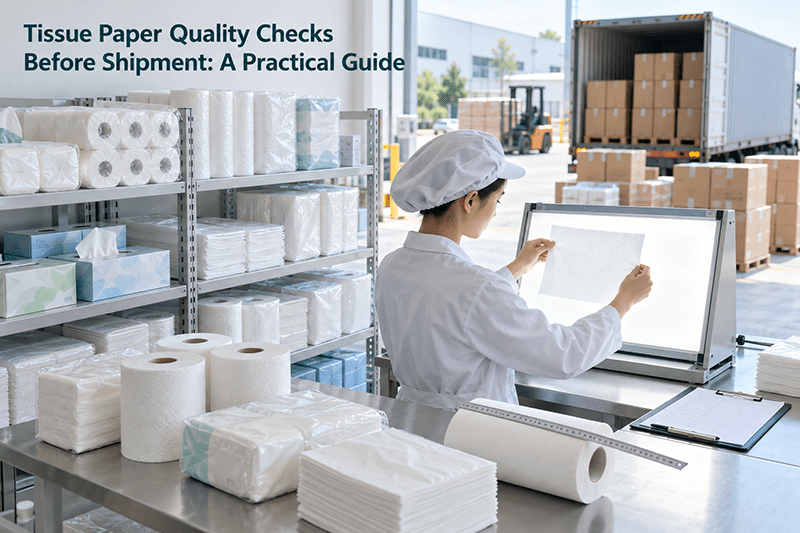
Why tissue paper quality checks before shipment matter
Once a container leaves India, correcting a quality problem becomes slow and expensive. That is why tissue paper quality checks before shipment are the importer's best protection. The aim is simple: confirm that bulk production matches the approved sample and signed specification sheet. The checks below cover GSM, ply, sheet count, dimensions, softness, absorbency and packing, and most can be done with basic tools by your own team or an inspection agency.
Good manufacturers run these checks during production too. At White Orchid, tissue is made from 100% virgin pulp, and our ISO 9001 quality management system supports consistent in-process testing. A pre-shipment check by the buyer adds an independent view and builds trust on both sides.
Timing matters. The most useful inspection happens when production is complete and at least most of the goods are packed, but before the container is loaded. At that point the full lot can be sampled, and any issue can still be corrected at the factory rather than argued about after arrival.
Agree the specification before any tissue paper quality checks
Inspection is only meaningful against a written standard. For each product, list GSM per ply, number of plies, sheet size, sheet count or roll length, roll diameter, core size, embossing pattern, pack count and carton marking, each with an agreed tolerance. Attach photos of the approved pack. Without this, a checker can only say whether goods look fine, which is not enough to accept or reject a shipment.
Share the specification with your inspector in advance, along with reference samples and the sampling plan. Ask for a written report with photos and measured values, not just a pass or fail. Over several shipments, these reports show whether quality is stable and help both sides improve.
GSM and ply checks
GSM, grams per square metre, tells you how much fibre is in each sheet. Cut a stack of sheets to a known area, weigh it on an accurate scale and calculate the weight per square metre, then divide by the number of plies. Compare the result with the specification. Separate the plies carefully to confirm the count, because a missing ply or lighter paper saves material at the buyer's expense and customers notice it quickly.
Moisture affects weight, so let sheets rest in the room for a while before weighing and test samples from several cartons, not one. A single reading can mislead. Several readings averaged together give a fair picture of the batch and make any real shortfall easy to see.
Sheet count, roll length and dimensions
For toilet rolls and kitchen towels, unroll several rolls and count sheets, and measure sheet length and width. For napkins and facial tissue, count sheets per pack and measure the unfolded size. Also check roll diameter and firmness, since a loosely wound roll can look full while holding less paper. Record every result, so you can see whether variation is random or a consistent shortfall.
| Check point | Simple method | Compare against |
|---|---|---|
| GSM per ply | Weigh sheets of known area, divide by plies | Specification GSM and tolerance |
| Ply and sheet count | Separate plies, count sheets per roll or pack | Stated ply and pack count |
| Dimensions | Measure sheet size, roll width and diameter | Specification sheet dimensions |
| Softness and lint | Hand feel panel, rub test on dark fabric | Approved reference sample |
| Absorbency | Time water uptake or measure water held | Reference sample result |
| Packing and marking | Check packs, cartons, labels and barcodes | Approved pack photos and artwork |
Softness, strength and lint
Softness is judged by touch, so compare production samples with the approved reference, ideally with two or three people scoring them blind. Check wet and dry strength by pulling sheets gently and seeing whether they tear too easily. For lint, rub a sheet on a dark cloth and look for fibre residue. Perforation should tear cleanly along the line, neither too weak for handling nor too strong for easy use.
For M-fold and L-fold products, also check how sheets feed from a dispenser. Load a full bundle into a typical multi-fold dispenser and pull sheets one by one. Sheets should come out singly and without tearing, because poor feeding is one of the most frequent complaints from washroom customers.
Absorbency checks for towels and napkins
Absorbency matters most for kitchen towels and tissue napkins. A simple test is to place a sheet on water and time how quickly it becomes fully wet, or to weigh a sheet dry, dip it, let it drain and weigh it again. Run the same test on the reference sample under the same conditions. Consistent results between the two matter more than an absolute figure.
Packing, marking and container loading
Packaging is part of quality. Check that packs are sealed, printed clearly, free of dirt and correctly counted per carton. Cartons should be strong, properly taped and marked with product code, quantity, batch and your required details. Scan barcodes. Before loading, confirm the container is clean, dry and odour free. Many importers use a recognised sampling plan such as AQL under ISO 2859-1 to decide how many cartons to open.
Photograph the loading at the start, middle and end, and record container and seal numbers. These photos help settle any claim for transit damage with the carrier or insurer.
If a check fails, agree the next step in writing before loading: rework, repacking, replacement or a partial shipment. A clear, calm process protects the relationship and ensures that only goods matching the specification leave the factory.
- Write every specification with a tolerance before production starts, not afterwards
- Weigh sheets of known area to confirm GSM per ply accurately
- Count sheets and measure dimensions on several rolls from different cartons
- Compare softness, lint and absorbency directly against the sealed reference sample
- Check cartons, barcodes and container condition before loading begins
A pre-shipment check is not about distrust. It is a shared record that the goods leaving the factory are exactly the goods both sides agreed to.
Ship quality checked tissue with White Orchid
White Orchid manufactures toilet rolls, kitchen towels, napkins, facial tissue and multi-fold tissue from 100% virgin pulp, under ISO 9001, ISO 14001, ISO 22000, GMP and FSC certification. Buyers are welcome to send inspectors or request photos and test results before shipment. We are appointing importers and distributors in India and overseas. Review our certificates and reach us through our contact page or WhatsApp +91 9825109781.
Frequently Asked Questions
How do I measure tissue paper GSM without a laboratory?
Cut sheets to a known area, weigh them on an accurate scale and convert the result to grams per square metre. Divide by the number of plies for GSM per ply, then compare with the agreed specification.
How many cartons should be checked in a tissue pre-shipment inspection?
Many importers use an AQL sampling plan under ISO 2859-1, which sets the sample size by lot size and acceptance level. Agree the plan and acceptance levels with the manufacturer before production starts.
What is the easiest way to test tissue absorbency?
Weigh a dry sheet, dip it in water, let it drain briefly and weigh it again. Repeat on the approved reference sample under the same conditions, and compare the two results rather than relying on one figure.
Can I send my own inspector to the factory in India?
Yes. White Orchid welcomes buyer inspectors or independent agencies before shipment. Share your checklist, sampling plan and inspection date in advance so production and packing can be scheduled around the visit.