
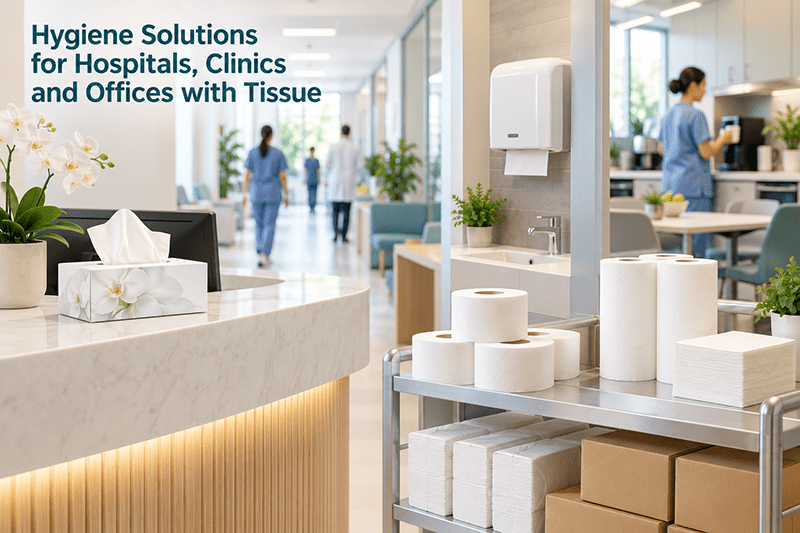
Why tissue is central to hygiene solutions for hospitals
Effective hygiene solutions for hospitals, clinics and offices depend on simple, dependable consumables. Tissue products are used hundreds of times a day for hand drying, wiping, covering and personal care. When they run out, are poor quality or sit in the wrong dispenser, hygiene routines break down. For distributors, healthcare and office accounts offer steady, repeat demand for a well chosen tissue range.
This guide explains which tissue products suit each setting, what facility managers look for, and how distributors can supply them reliably.
The same principles apply across settings. A busy outpatient clinic, a hospital ward and a corporate office all need tissue that is clean, dependable and easy to dispense. The difference lies in volume, grade and presentation, which a good distributor matches to each area rather than supplying one product for everything.
Hand drying with M-fold paper towels
Thorough hand drying is part of good hand hygiene, and single-use paper towels are widely used in healthcare settings for this reason. M-fold towels dispensed from wall mounted units let staff and visitors take one clean towel at a time without touching a shared surface. They are standard in clinic washrooms, treatment rooms, staff areas and office washrooms.
When supplying M-fold, confirm the dispenser model already installed, because towel fold size must suit the unit. Absorbency matters too: a towel that dries hands in one or two sheets reduces both consumption and waste bin volume.
Facial tissue for wards, waiting rooms and desks
Facial tissue boxes are needed in patient rooms, consultation rooms, waiting areas and on office desks. Soft tissue made from 100% virgin pulp is comfortable for patients who use it frequently. Facial tissue in premium boxes suits private rooms and executive offices, cube boxes fit small counters, and refills help housekeeping keep costs under control.
In clinics, tissue boxes placed within easy reach of patients encourage people to cover coughs and sneezes. In offices, a box on each desk or meeting table is a small courtesy employees notice. Both settings consume facial tissue steadily throughout the year, with higher use during seasonal cold and flu periods.
| Area | Recommended tissue product | Main purpose |
|---|---|---|
| Clinic and hospital washrooms | M-fold towels, toilet rolls | Hand drying and sanitation |
| Patient rooms and wards | Box facial tissue, toilet rolls | Personal care and comfort |
| Waiting and reception areas | Box facial tissue | Visitor convenience |
| Staff pantries and canteens | Kitchen towels, napkins | Wiping and food service |
| Office washrooms and desks | M-fold, toilet rolls, facial tissue | Daily hygiene for employees |
Toilet rolls for high traffic washrooms
Hospitals, clinics and offices run washrooms that see heavy traffic all day. Toilet tissue rolls must be reliable, soft enough for comfort and sized for the dispensers in use. Many facilities use a value grade such as Eco or Comfort 350 in public washrooms and a softer grade in patient or executive areas, balancing comfort with budget.
Consistent roll dimensions make housekeeping easier. Staff can plan replacement rounds accurately, and procurement can forecast monthly volumes, which is exactly what facility managers want from a supplier.
Kitchen towels and napkins in pantries and canteens
Hospital canteens, clinic pantries and office kitchens need kitchen paper towels for wiping spills and surfaces, and napkins for staff meals. Absorbent kitchen towels reduce reliance on shared cloths. Napkins in dispensers or packs keep food service tidy. These lines add volume to a healthcare or office account with little extra effort for the distributor.
Where canteens serve patients or visitors, food safety matters. White Orchid manufactures under ISO 22000 and GMP, which helps procurement teams approve tissue used around food preparation and service areas in hospitals and corporate cafeterias.
In a clinic, a tissue box that is always full and a towel dispenser that never runs dry say more about hygiene standards than any poster on the wall.
What facility managers look for in hygiene solutions for hospitals
Healthcare and office buyers look beyond price. They want consistent quality, reliable delivery, clear documentation and a supplier who understands their dispensers. Certifications such as ISO 9001 for quality, ISO 14001 for environmental management and GMP help procurement teams approve a supplier. Tissue from 100% virgin pulp offers a clean, consistent product that buyers can trust.
- Map every washroom, ward and pantry to the right tissue product and grade.
- Confirm dispenser models before quoting M-fold towels and toilet rolls.
- Offer separate grades for patient areas, staff zones and public washrooms.
- Share quality and management certifications early in the approval process.
- Agree monthly volumes and delivery schedules to avoid stock outs.
Documentation often decides whether a supplier gets onto an approved vendor list. Having certificates, product specifications and packing details ready when a procurement team asks can shorten approval considerably, and shows the professionalism that healthcare buyers expect from long term partners.
Supplying healthcare and office accounts as a distributor
Hospitals and large offices often buy through annual contracts or tenders. Distributors who can supply the full tissue list, with steady stock and prompt delivery, are well placed to win them. Importing mixed containers of towels, rolls and facial tissue lets you hold balanced stock and respond quickly to each facility's monthly order.
Smaller clinics and offices buy more frequently in smaller quantities. A distributor who keeps a local warehouse and offers regular delivery rounds can serve both segments from the same imported stock.
Storage and stock planning for hygiene supplies
Tissue must be stored dry and clean before it reaches wards and washrooms. Distributors and facilities should keep cartons off the floor, away from damp walls and in a clean, ventilated area. Sealed inner poly packs protect products from dust, so they should stay closed until they are placed in dispensers or rooms.
Stock planning prevents emergencies. Agree a minimum stock level with each facility, based on monthly use per area, and schedule deliveries before stocks fall below it. Seasonal peaks, new wings or extra office staff change consumption, so review volumes with facility managers every few months and adjust your import plan accordingly.
Source hygiene tissue from White Orchid
White Orchid manufactures M-fold towels, facial tissue, toilet rolls, kitchen towels and napkins from 100% virgin pulp at Santej, Gujarat, with ISO 9001, ISO 14001, ISO 22000, GMP and FSC certifications. Contact White Orchid on +91 9825109781 or [email protected] to plan supply for hospitals, clinics and offices, or view our certificates.
Frequently Asked Questions
Which tissue products do hospitals and clinics use most?
The main lines are M-fold hand towels for hand drying, toilet rolls for washrooms, box facial tissue for wards and waiting areas, and kitchen towels and napkins for pantries and canteens.
Are paper towels better than cloth towels in clinics?
Single-use paper towels avoid sharing a towel between users, which is why they are widely used in healthcare washrooms and treatment rooms. Each person takes a fresh towel and discards it after use.
What certifications should a hospital tissue supplier have?
Buyers commonly look for ISO 9001 for quality management, ISO 14001 for environmental management and GMP. White Orchid holds these along with ISO 22000 and FSC certifications, available on request.
Which toilet roll grade suits office washrooms?
Many offices use a value grade such as Eco or Comfort 350 in general washrooms and a softer grade such as Comfort 500 or Super Soft in executive areas. Always check the dispenser size first.