
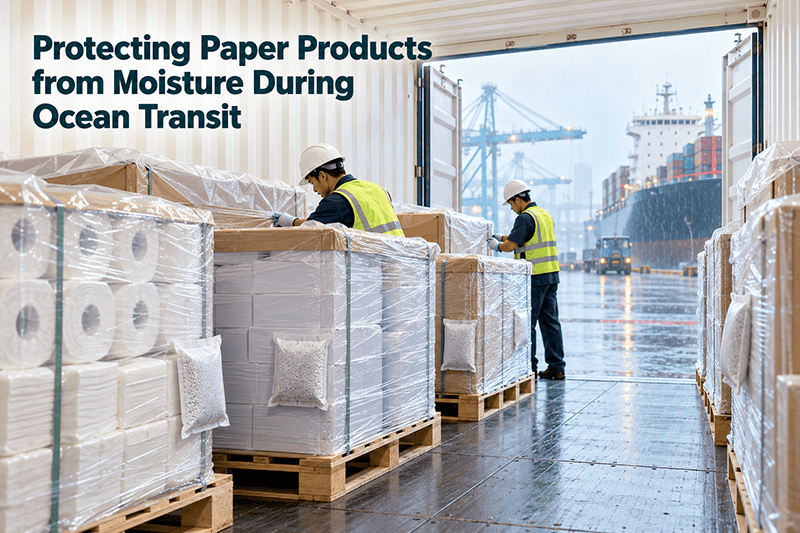
Why protecting paper products from moisture is critical
Protecting paper products from moisture is one of the most important parts of shipping tissue, bagasse tableware and copy paper by sea. Paper fibres absorb water readily. A damp carton loses stacking strength, tissue can pick up odours or mould spots, and moulded bagasse can soften or stain. Even a small amount of condensation over a long voyage can turn a sellable container into a claim.
The main risk is not rain leaking in, but moisture already inside the container. Air, wooden floors, pallets and the cargo itself all hold water vapour. As the container moves between warm and cool climates, that vapour condenses on the cold roof and walls and drips back onto cartons, a problem widely known as container rain.
How container rain forms during the voyage
During the day, sunlight heats the container and the air inside holds more moisture. At night, or as the vessel moves into cooler waters, the steel cools quickly and the air reaches its dew point. Droplets form on the ceiling and fall onto the top layer of cargo. Voyages that cross climate zones, for example from India to Europe or North America, carry the highest risk.
Packing conditions add to the problem. Goods loaded during a humid monsoon month hold more moisture in their fibres and cartons than goods packed in dry weather. A container closed on a damp afternoon starts its voyage with a high moisture load, so timing, dry storage before loading and quick stuffing all help reduce the risk from the very first day.
Container inspection before loading
Good protection starts before the first carton goes in. Every container should be inspected for holes, damaged door seals, rust patches and a wet or stained floor. A simple light test, closing the doors from inside and looking for daylight, shows pinholes. The container should also be free of strong odours, because paper absorbs smells that customers notice immediately.
- Check roof, walls and doors for holes using a light test inside.
- Reject containers with wet, stained or freshly washed wooden floors.
- Inspect door gaskets for tears that could let in water or humidity.
- Smell the interior and reject containers with chemical or food odours.
- Photograph the empty container and seal number as a record for claims.
If a container fails any of these checks, ask the transporter for a replacement rather than trying to fix it on site. A few hours of delay at the factory costs far less than a rejected shipment, and a clean, dry, odour free box is the foundation for every other moisture protection measure described below.
Using desiccants to control humidity
Container desiccants absorb moisture from the air during the voyage. The most common type for long sea routes is a calcium chloride based strip or bag, hung from the container lashing points along the side walls. Smaller silica gel sachets are sometimes placed inside cartons for sensitive items. The quantity needed depends on container size, voyage length, climate and cargo, so follow the desiccant supplier's guidance for your route.
Desiccants work best alongside other measures. They cannot dry a wet floor or damp pallets, and they will saturate quickly if the cargo itself was packed in humid conditions.
Liners, top sheets and carton protection
A kraft paper or laminated liner along the walls and a top sheet over the cargo help catch condensation before it reaches cartons. Some shippers use a full container liner for very sensitive goods. Inside the cartons, poly bags protect retail packs of toilet rolls, facial tissue and napkins, so even a marked outer carton leaves the product itself clean and sellable.
Carton quality supports this. Export grade corrugated board holds its strength better in humid air, and taping every seam fully keeps dust and damp out of the carton. Clear handling marks such as keep dry and this way up remind terminal and warehouse staff that the contents are paper goods that need care.
| Measure | What it does | Most useful for |
|---|---|---|
| Container desiccant strips | Absorb humidity during the voyage | All long sea routes |
| Kraft liner and top sheet | Catch drips from roof and walls | Top layers of tissue cartons |
| Inner poly bags | Keep retail packs clean and dry | Toilet rolls, napkins, facial tissue |
| Stretch wrapped pallets | Hold cartons together, shed surface moisture | Palletised loads and copy paper |
| Dry, treated pallets | Stop moisture rising from the floor | Any palletised shipment |
Pallet wrapping and dry pallets
If cargo is palletised, the pallets themselves must be dry. Wet timber releases moisture throughout the voyage. Export pallets should be heat treated to ISPM 15 and stored under cover before use. Stretch wrapping holds cartons together, reduces shifting and sheds surface moisture, and a top cap sheet adds protection. For floor loaded cargo, a layer of kraft sheet on the floor serves a similar purpose.
Most moisture damage is loaded into the container, not let in at sea. Dry cartons, dry floors and dry pallets matter more than anything added later.
Protecting bagasse tableware and thermal rolls
Moulded bagasse is naturally fibrous, so it benefits from the same care as tissue. Bagasse bowls and clamshells are packed in sleeves inside master cartons, which keeps them clean even if the outer carton picks up moisture. Thermal rolls are more sensitive to heat than humidity, but individual wrapping protects the coating from damp and dust.
Unloading and storage at destination
Open the container promptly once it arrives. A sealed box left in the sun at the terminal keeps cycling heat and condensation. Unload into a dry, ventilated warehouse, keep cartons off the floor, and check the top layer and door end first. If you find wet cartons, photograph them with the container number before moving anything, as this supports an insurance claim.
Marine cargo insurance is worth arranging on every paper shipment, whether you buy on CIF terms or insure yourself on FOB or CFR. Read the policy wording for cover on sweat and condensation damage, and keep inspection photos, packing lists and the loading record together so any claim can be supported quickly.
Ship dry with White Orchid
White Orchid packs tissue, bagasse tableware, thermal rolls and copy paper for long sea voyages, with inner poly packing, strong master cartons and container checks before loading. Tell us your route and we will discuss the right moisture protection for your shipment. Contact White Orchid on +91 9825109781 or [email protected] to plan your next container.
Frequently Asked Questions
What causes moisture damage to tissue in shipping containers?
Mostly condensation, often called container rain. Moisture from the air, floor, pallets and cargo condenses on the cold container roof as temperatures change, then drips onto the top cartons. Leaks through damaged containers are a smaller but real risk.
How many desiccant bags should I use in a 40 ft container?
It depends on voyage length, climate zones crossed and cargo type. Desiccant suppliers publish guidance by container size and route. Long voyages from India to Europe or North America usually need more than short Gulf routes.
Do bagasse plates and bowls get damaged by humidity in transit?
Bagasse is fibrous and can stain or soften if it gets wet. Packing in sleeves inside strong master cartons, with a dry container and desiccants, keeps the tableware clean and ready for use on arrival.
What should I do if I find wet cartons when unloading?
Stop unloading, photograph the wet cartons with the container and seal numbers visible, and note the position in the container. Inform your insurer and forwarder promptly, and move dry cartons to a ventilated area.