
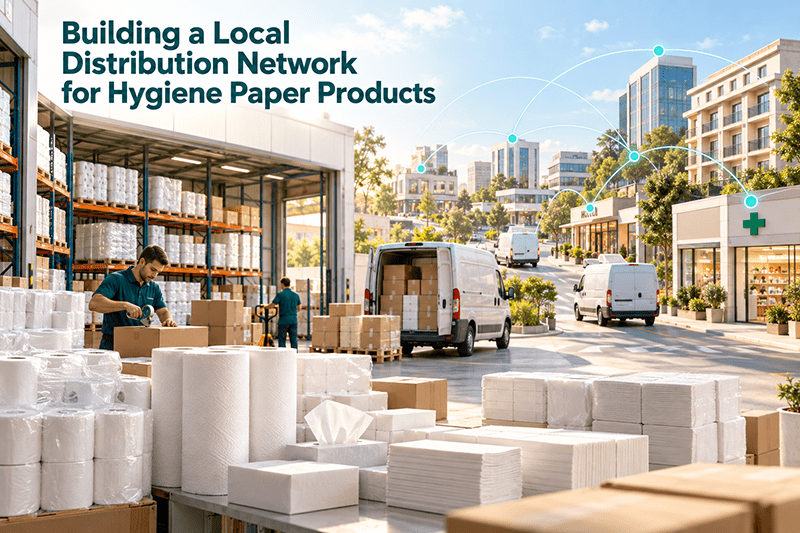
Why a distribution network for hygiene paper products matters
Importing a container is only half the job. The real business is moving that stock quickly to the shops, offices and caterers who use it. A strong distribution network for hygiene paper products lets you reach more customers, turn stock faster and hold steadier prices. Tissue, towels and napkins are bulky and low in value per cubic metre, so the way you store and deliver them decides much of your profit.
A network does not have to be large on day one. Many successful distributors begin with one warehouse, one delivery vehicle and a few loyal accounts, then add sub-dealers and routes as sales grow. What matters is building each part properly: the right channels, a well run warehouse, dependable partners and a delivery routine that customers can rely on week after week.
Map your customer channels first
Start by listing the channels you can serve. Typical ones are supermarkets and convenience stores, independent grocers and pharmacies, wholesale cash and carry outlets, office and facility management companies, cleaning contractors, hotels, restaurants and caterers, hospitals and schools. Each channel buys different products, in different pack sizes, with different payment habits. Choose two or three to focus on first rather than trying to serve everyone from day one.
Match your range to those channels. Retail shoppers want attractive packs of toilet rolls and facial tissue boxes. Facility managers want M-fold tissue for dispensers and large kitchen rolls. Restaurants want napkins and often bagasse tableware for takeaway. A clear channel map tells you which products and pack sizes to order.
Warehousing for bulky hygiene paper stock
Tissue takes space, so warehouse choice matters. Look for a dry, clean site with good truck access, ideally near your main customer cluster. Stack cartons on pallets away from walls and floors to avoid damp, and keep product lines clearly separated so picking is quick. Plan space for at least one full container plus buffer stock, because sea freight transit times vary by carrier, route and season.
Good stock control is as important as space. Use a simple system, even a well kept spreadsheet at first, to track stock by product and batch, and set reorder points based on average weekly sales plus the time a new container takes to arrive. Running out damages trust with customers, while overstocking ties up cash and space.
Appointing sub-dealers and wholesalers
Few importers can reach every corner of a country alone. Sub-dealers in other cities or regions extend your network without the cost of new warehouses. Choose partners who already sell to your target channels, have their own delivery vehicles and pay reliably. Give each a defined area, a clear price list with their margin built in and agreed minimum order levels. Written agreements prevent disputes over territory and pricing later.
Support your sub-dealers so they succeed. Share product information, samples and simple sales material, and keep their price lists consistent with yours so customers in different areas are not played against each other. Review each partner's sales every quarter. Strong partners deserve more support and perhaps a larger territory, while those who miss targets repeatedly may need to be replaced.
| Model | Best for | Main trade-off |
|---|---|---|
| Direct delivery from your warehouse | Customers in your home city | Needs your own vehicles and staff |
| Regional sub-dealers | Other cities and rural areas | Shares margin with partners |
| Cash and carry wholesalers | Small shops that collect their own stock | Lower price per carton |
| Key account supply contracts | Hotel groups and facility companies | Longer payment terms, tender pricing |
Delivery routes and service standards
Plan delivery routes by area and day so each truck runs full. Customers in one district can have a fixed delivery day, which reduces fuel and driver time and makes ordering easier for them. Agree service standards, such as delivery within a set number of days after order, and track whether you meet them. Reliable delivery is often the reason customers stay with a distributor even when a competitor offers a lower price.
Delivery vehicles and handling also affect product condition. Tissue cartons crush easily if stacked badly or loaded with heavy goods on top. Train drivers to load carefully, keep vehicles clean and dry and collect signed delivery notes. Damaged cartons returned by customers cost you twice, once in lost stock and again in lost goodwill, so good handling pays for itself.
In hygiene paper distribution, customers rarely remember the price they paid last month. They always remember the week the toilet rolls did not arrive.
Sales team, credit and data
A small, focused sales team that visits customers regularly will grow your network faster than advertising alone. Give them simple tools: a price list per channel, product samples and a clear credit policy. Set credit limits for each customer and follow up overdue payments promptly. Record sales by customer, product and area, and review them monthly to see where the network is growing and where it needs attention.
Use that data to shape the next container. If one region sells more napkins and another more kitchen towels, adjust the mix accordingly. Share sell through information with your supplier as well, so production and packing can be planned in advance and your stock is ready when you need it.
- Choose two or three core channels and match your product range to them.
- Locate a dry, accessible warehouse close to your main customer cluster.
- Appoint sub-dealers with defined territories, price lists and written agreements.
- Run fixed delivery days by area so every truck travels fully loaded.
- Track sales and stock monthly and adjust each container order accordingly.
Planning for seasonal peaks in hygiene paper demand
Demand for hygiene paper is steady but not flat. Tourist seasons lift hotel and restaurant orders, festivals and wedding seasons raise napkin and tableware sales, and public tenders may bring large one time orders. Look at last year's sales, talk to key customers about their plans and order containers early enough to cover peaks. Being in stock when competitors run short is one of the fastest ways to win new accounts.
Grow your distribution network with White Orchid
White Orchid is appointing distributors and importers in India and overseas for tissue, thermal rolls, bagasse tableware and copy paper. We can ship mixed containers, pack under your private label with an MOQ and support you with product information for your sales team. Please contact us or WhatsApp +91 9825109781, and learn more about White Orchid.
Frequently Asked Questions
How many product lines should a new hygiene paper distributor start with?
Start with a focused range that suits your chosen channels, often toilet rolls, napkins, kitchen towels and one dispenser product. Add more lines once you understand what your customers reorder.
Should I appoint sub-dealers or deliver directly?
Deliver directly where your customers are concentrated and use sub-dealers for distant cities or rural areas. Many distributors combine both models as their network grows.
How much stock should I hold for imported tissue?
Hold enough to cover average sales during the time the next container takes to arrive, plus a safety buffer, since transit times vary by carrier, route and season.
Does White Orchid support distributors with marketing material?
White Orchid can share product details and specifications and offers private label packing with an MOQ. Discuss your market needs with the team when you enquire about distribution.