
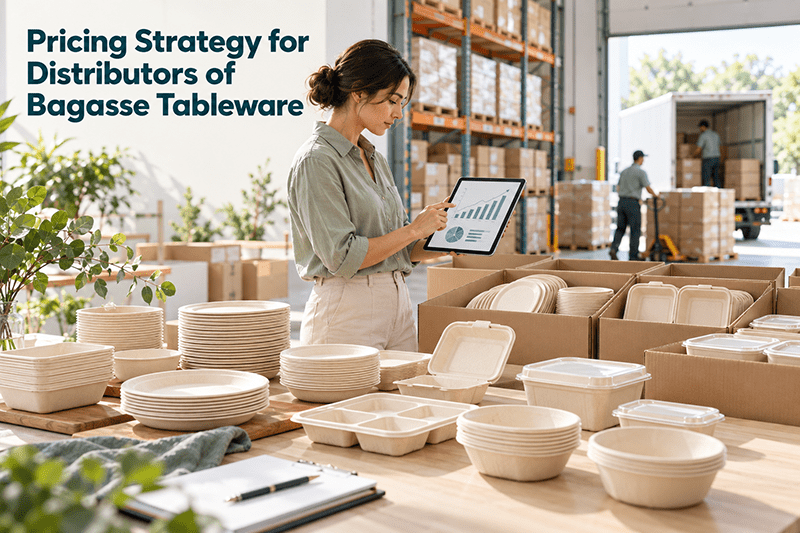
Why bagasse tableware needs a clear pricing strategy
Bagasse tableware is moulded from sugarcane bagasse pulp and is biodegradable and compostable, which makes it a strong alternative to plastic and foam. Yet it often costs more per piece than the products it replaces, so buyers question the price. A clear pricing strategy for bagasse tableware helps distributors hold healthy margins, win caterers and retailers and grow volume as rules against single use plastic spread across many markets.
Pricing is not only about covering costs. It also signals quality and positioning. Price too low and customers may doubt that the product will hold hot food without leaking. Price too high and you lose volume to cheaper alternatives. The aim is a price that covers landed and operating costs, leaves a sensible margin and matches the value your chosen customers see in the product.
Start with landed cost per piece
Every pricing decision starts with an accurate landed cost. Add the supplier price, freight, insurance, duty, taxes and local charges, then divide by the number of pieces, not just cartons. Bagasse items are usually classified under HS heading 4823, often 4823.70, but confirm the exact code and duty on your official tariff tool or with a customs broker. Bulky items like clamshells carry more freight per piece than flat plates.
Calculate the cost for each item separately. A 6 inch round plate, a 350 ml bowl and a 9x9 clamshell have very different weights, carton volumes and freight costs. Averaging them hides which products earn money and which do not. A simple sheet with landed cost per piece for each item becomes the base of every price list you prepare.
Channel price lists for bagasse tableware
Different customers need different prices. Food delivery kitchens and caterers buy large volumes of containers with lids and clamshells and expect keen pricing. Retail shoppers buy small packs of plates and bowls for parties and pay more per piece. Event planners and institutions sit in between. Build a separate price list for each channel, with clear minimum order quantities and delivery terms.
Keep the gaps between price lists logical. A retailer must be able to buy from you, add their own margin and still sell at a price shoppers accept. A caterer buying ten cartons should pay less per piece than one buying a single carton. Written price lists with clear tiers prevent sales staff from offering random discounts that slowly erode your margin.
| Channel | Typical pack | Pricing approach |
|---|---|---|
| Cloud kitchens and takeaways | Bulk cartons of containers and clamshells | Volume tiers with keen per piece prices |
| Caterers and event planners | Bulk plates, bowls and compartment trays | Project quotes with delivery included |
| Supermarkets and retail | Small retail packs of plates and bowls | Higher per piece price, retailer margin built in |
| Institutions and canteens | Meal trays and bowls in bulk | Contract pricing for regular supply |
Sell on value, not just on price
Bagasse will rarely be the cheapest option on a price list, so sell its value. It handles hot and oily food, is rigid enough for heavy meals and is biodegradable and compostable. Regulations such as the EU Single-Use Plastics Directive, India's single-use plastic ban and the UAE's phased ban on single use plastic products push buyers away from plastic and foam. Help customers see bagasse as the compliant, lower risk choice for their business.
Be careful with environmental claims. If your customers need proof of compostability, ask the supplier for test reports to standards such as EN 13432 or ASTM D6400 for the specific items, and check local food contact rules. Accurate claims build trust, while exaggerated ones can create legal problems for both you and your customers.
Customers do not buy bagasse because it is cheap. They buy it because it is sturdy, compliant and better for their brand. Price it with that value in mind.
Bundles, tiers and pack sizes
Bundles raise average order value. A takeaway starter pack might combine clamshells, bowls and containers with lids at a combined price. Volume tiers reward larger orders with a lower price per piece while protecting your margin on small orders. Retail packs in useful counts, such as a pack of plates sized for a family event, often earn a better margin per piece than bulk cartons.
Review prices regularly. Freight rates, exchange rates and local competition change, and a price that worked last year may no longer cover costs. Update price lists on a set schedule and give customers notice of any change, which keeps relationships professional and avoids sudden disputes.
- Calculate landed cost per piece for every bagasse item you sell.
- Prepare separate price lists for takeaway, catering, retail and institutional buyers.
- Use volume tiers and bundles to grow order size without cutting margins.
- Explain rigidity, heat resistance and compostability when customers compare with plastic.
- Review price lists regularly as freight, exchange rates and competition change.
Avoid common bagasse pricing mistakes
The most common mistake is matching the price of plastic and hoping volume will make up the difference. It rarely does. Others include ignoring freight differences between flat and bulky items, offering long credit terms to small caterers and forgetting breakage in storage. A disciplined pricing strategy for bagasse tableware treats each item, channel and customer on its own merits.
Another trap is competing with foam and plastic on price in markets where those products are still widely allowed. There, focus on customers who choose bagasse for brand image, customer expectations or upcoming regulation. Hotels, premium caterers and eco conscious cafes often value presentation and sustainability. Serving them well at a fair price usually brings better returns than chasing the most price sensitive buyers.
Payment terms as part of your bagasse pricing
Credit terms are a hidden part of every price. Offering sixty days of credit to a small caterer is effectively a discount, and it also carries a risk of non payment. Consider a small reduction for advance or prompt payment, set credit limits for each account and link better prices to reliable payment history. This keeps cash moving so you can fund the next container of bagasse stock.
Source bagasse tableware from White Orchid
White Orchid manufactures bagasse plates, bowls, clamshells and containers with lids at Santej, near Ahmedabad, with private label options on cartons and poly bags with an MOQ. Our range covers round plates from 6 to 12 inch, compartment plates and meal trays, bowls from 120 ml to 350 ml, clamshells and round and rectangular containers with matching lids. Share your target channels and items, and we will help you plan a range and container mix. Please contact us or view our certificates.
Frequently Asked Questions
Why is bagasse tableware usually priced higher than plastic?
Bagasse uses moulded sugarcane pulp and more energy intensive forming than many plastics. Buyers pay for rigidity, heat resistance and compostability, and for compliance with rules restricting single use plastic.
Should I price bagasse tableware per piece or per carton?
Calculate cost per piece for accuracy, then quote per carton for bulk buyers and per pack for retail. Per piece figures help customers compare options against plastic or foam.
Which bagasse items suit food delivery businesses best?
Clamshells and containers with matching lids are popular with takeaways and cloud kitchens, while compartment trays and bowls suit meals, canteens and catering events.
Can White Orchid supply bagasse tableware under my brand?
Yes. White Orchid offers private label packing on poly bags, boxes and master cartons with a minimum order quantity. Share your item list and design requirements when you enquire.